


Noticing changes in your toenails, such as discoloration, thickening, or unusual texture can be concerning, especially when those changes develop gradually. Many patients are unaware that there are several types of toenail fungus, each with distinct characteristics and implications for treatment.
Understanding the different types of toenail fungus is essential for early detection and effective care. For older adults, individuals with diabetes, or those with circulation challenges, recognizing these changes early can help prevent complications and support better long-term outcomes.
What Is Toenail Fungus?
Toenail fungus affects approximately 10% of the general population and becomes more common with age, affecting up to 20% or more of adults over 60, according to data from the National Library of Medicine.
Fungi thrive in warm, moist environments, making the feet particularly vulnerable, especially when exposed to tight footwear, sweating, or communal surfaces.
While the condition often begins subtly, it can progress over time, leading to nail thickening, discoloration, and structural damage if not addressed early.
Why Identifying the Types of Toenail Fungus Matters
Not all fungal infections affect the nails in the same way. The different types of onychomycosis involve different layers of the nail and may require different treatment approaches.
Accurate identification helps:
- Guide appropriate and targeted treatment
- Prevent progression or recurrence
- Reduce the risk of spreading to other nails
- Protect surrounding skin and tissue
For a closer look at how early changes may appear, you can explore the guide on recognizing early signs of toenail fungus, which highlights subtle symptoms that are often overlooked.
The Main Types of Toenail Fungus
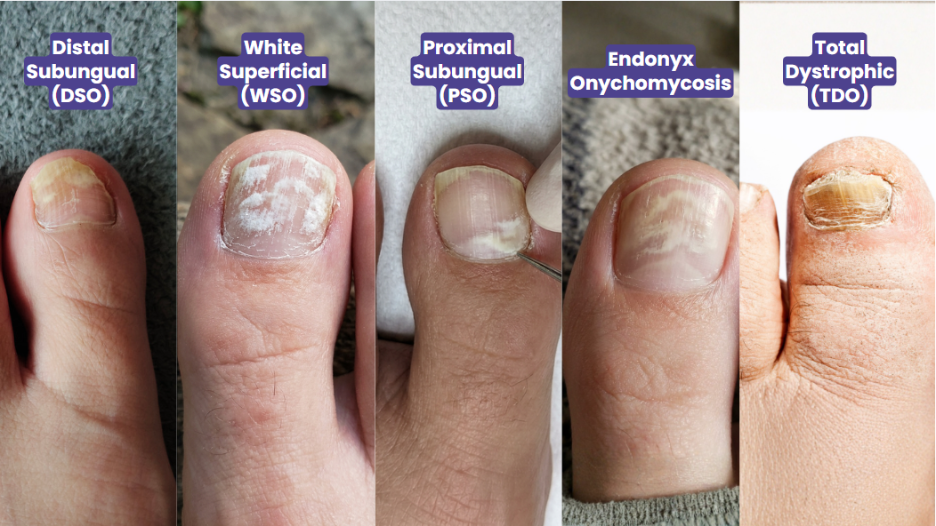
There are several recognized different types of toenail fungus, each with specific patterns and clinical features.
Distal Subungual Onychomycosis (DSO)
This is the most common form, responsible for the majority of infections.
Typical appearance:
- Yellow, white, or brown discoloration beginning at the nail tip
- Thickened nail plate
- Crumbly or brittle edges
- Debris beneath the nail
Progression:
The infection starts at the edge of the nail and gradually spreads inward toward the nail bed.
Risk factors:
- Aging
- Diabetes
- Reduced circulation
White Superficial Onychomycosis (WSO)
This type affects the outer surface of the nail.
Typical appearance:
- White, chalky patches on the nail surface
- Powdery or flaky texture
- Nails may become soft and fragile
Key characteristic:
Because it remains on the surface initially, this type may be easier to treat when identified early.
Proximal Subungual Onychomycosis (PSO)
A less common but clinically important form.
Typical appearance:
- Discoloration starting near the cuticle
- White or pale patches that spread outward
- Progressive nail thickening
Clinical significance:
PSO may be associated with underlying immune system concerns and should always be evaluated by a healthcare professional.
Endonyx Onychomycosis
This form affects the interior of the nail plate without involving the nail bed.
Typical appearance:
- Diffuse, milky discoloration
- Smooth nail surface
- Minimal thickening
Key distinction:
Unlike other types, there is little to no debris or separation of the nail.
Total Dystrophic Onychomycosis
This represents the most advanced stage of infection, often developing when earlier forms are left untreated.
Typical appearance:
- Severe thickening and distortion
- Crumbling or brittle nail structure
- Dark discoloration
- Nail separation or destruction
At this stage, the nail is significantly damaged, and professional care is essential to prevent further complications.
For a deeper understanding of how fungal infections progress, you can review the stages outlined in this guide on toenail fungus stages and treatment timelines.
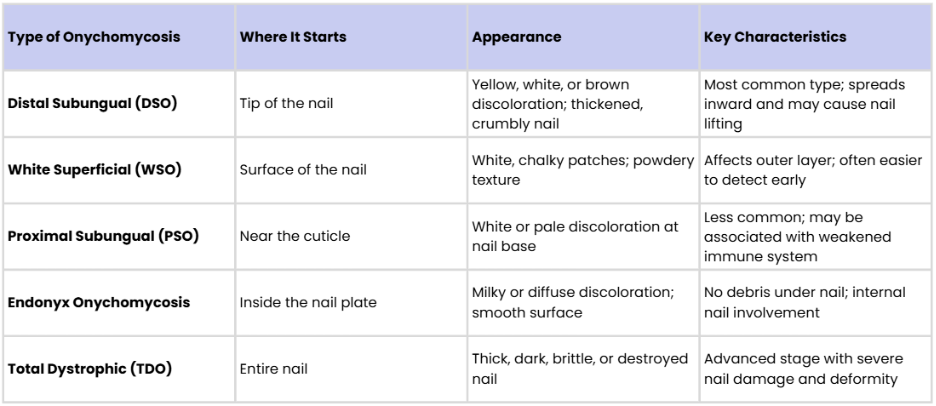
Common Symptoms Across Different Types
Although the different kinds of nail fungus vary in presentation, many share overlapping symptoms:
- Discoloration (yellow, white, brown, or dark)
- Thickened or misshapen nails
- Brittle or crumbly texture
- Nail lifting or separation from the nail bed
- Mild pressure or discomfort
Because these symptoms often develop gradually, they may go unnoticed until the condition becomes more advanced.
Risk Factors and Why Some Patients Are More Vulnerable
Certain individuals are more likely to develop different types of toe nail fungus, particularly those with underlying health conditions.
Higher-risk groups include:
- Adults over age 60
- People with diabetes
- Individuals with poor circulation
- Patients with weakened immune systems
- Those frequently exposed to moisture or tight footwear
In individuals with diabetes, the risk is significantly elevated. Research indicates that people with diabetes are more likely to develop fungal nail infections and may experience slower healing, increasing the likelihood of complications.
Even minor nail changes can become more serious if not addressed early, making routine monitoring and professional care especially important.
When to Seek Professional Care
While mild cases may seem manageable, toenail fungus should not be ignored—especially when symptoms persist or worsen.
Professional evaluation is recommended if:
- The nail becomes thick, discolored, or distorted
- Multiple nails are affected
- The condition continues to progress over time
- There is discomfort when walking or wearing shoes
- You have diabetes or circulation issues
Early intervention improves treatment outcomes and helps prevent the infection from spreading or becoming more difficult to manage.
For patients experiencing ongoing or worsening symptoms, specialized toenail fungus relief services can provide targeted care and help restore nail health safely.
Why Early Treatment Makes a Difference
Timely treatment can:
- Prevent the spread of infection to other nails
- Preserve the structure and integrity of the nail
- Reduce discomfort and pressure
- Lower the risk of complications such as skin infections or ulcers
Delaying care may allow the infection to progress into more severe forms, requiring more extensive treatment.
Compassionate, Expert Care for Nail Health
Understanding the types of toenail fungus allows you to recognize early changes and take informed steps toward care. While these infections are common, they require proper evaluation to ensure effective treatment and long-term nail health.
Allevio Care Anywhere provides compassionate, expert in-home podiatry services designed to support patients in managing fungal nail conditions safely and effectively. Their approach focuses on early detection, personalized treatment, and preventive care, helping patients maintain healthy feet in the comfort of their home.
If you or a loved one are noticing changes in toenail appearance, you can request an appointment through the contact page to receive professional guidance. Allevio Care Anywhere proudly serves patients across Utah, Idaho, Houston, and Nebraska, you can explore all service areas on our locations page to find care near you.
Early, expert care can make a meaningful difference in protecting your foot health and preventing complications.


