


Swelling in the lower legs, feet, or ankles can be unsettling, especially for older adults and their caregivers. While swollen ankles in elderly individuals are common, they are not always harmless. In some cases, swelling is mild and temporary. In others, it may signal circulation problems, heart disease, kidney dysfunction, medication side effects, or complications related to diabetes.
Understanding what is normal, what is not, and when to seek professional evaluation can help protect comfort, mobility, and overall health.
Why Swollen Ankles in Elderly Adults Are So Common
As we age, the body becomes less efficient at moving fluid back toward the heart. Gravity pulls fluid downward, and reduced calf muscle strength decreases circulation efficiency. These age-related changes make older adults more prone to edema, the medical term for fluid buildup in tissues.
Studies suggest that up to 20–30% of adults over age 65 experience some degree of lower-extremity swelling, particularly later in the day. However, while swelling may be common, it should not automatically be dismissed as “just aging.”
What Causes Swollen Ankles in Seniors?
Understanding what causes swollen ankles in seniors requires looking at both localized and systemic factors.
Chronic Venous Insufficiency
One of the most common causes of foot and ankle swelling in seniors is venous insufficiency. When the valves in leg veins weaken, blood does not return efficiently to the heart. Fluid pools in the lower extremities, leading to ankle swelling in elderly patients.
Symptoms often include:
- Heaviness in the legs
- Swelling that worsens throughout the day
- Skin discoloration near the ankles
- Varicose veins
If untreated, venous insufficiency can contribute to skin breakdown and ulcers.
Reduced Mobility and Sedentary Lifestyle
Prolonged sitting or standing limits calf muscle activity, which normally acts as a pump to circulate blood upward. Seniors who spend extended periods seated may develop feet swelling in seniors, especially after long travel or inactivity.
Heart Conditions
Congestive heart failure can cause fluid retention in lower extremities. Swelling related to heart conditions is typically bilateral (affecting both legs) and may be accompanied by fatigue, shortness of breath, or rapid weight gain due to fluid accumulation.
Kidney or Liver Disease
The kidneys regulate fluid balance. Impaired kidney function may lead to fluid retention and swelling of feet in elderly individuals. Similarly, liver disease can affect protein levels in the blood, altering fluid distribution.
Medication Side Effects
Certain medications commonly prescribed to older adults, including calcium channel blockers, corticosteroids, and some anti-inflammatory medications can contribute to fluid retention and ankle swelling in elderly patients.
Lymphedema
Lymphatic system dysfunction may cause persistent swelling, often with thickened or firm skin.
Injury or Infection
Swelling that affects only one leg, especially if sudden, painful, or accompanied by warmth, should be evaluated promptly to rule out infection or deep vein thrombosis (DVT).
When Is Swelling a Normal Age-Related Change?
Mild swelling that occurs after:
- Extended standing
- Long periods of sitting
- Warm weather exposure
- Air travel
may improve with leg elevation and rest. Temporary swelling that resolves overnight is often less concerning.
However, persistent, worsening, or unexplained swollen ankles in elderly individuals should not be considered normal without medical evaluation.
Symptoms That Require Prompt Evaluation
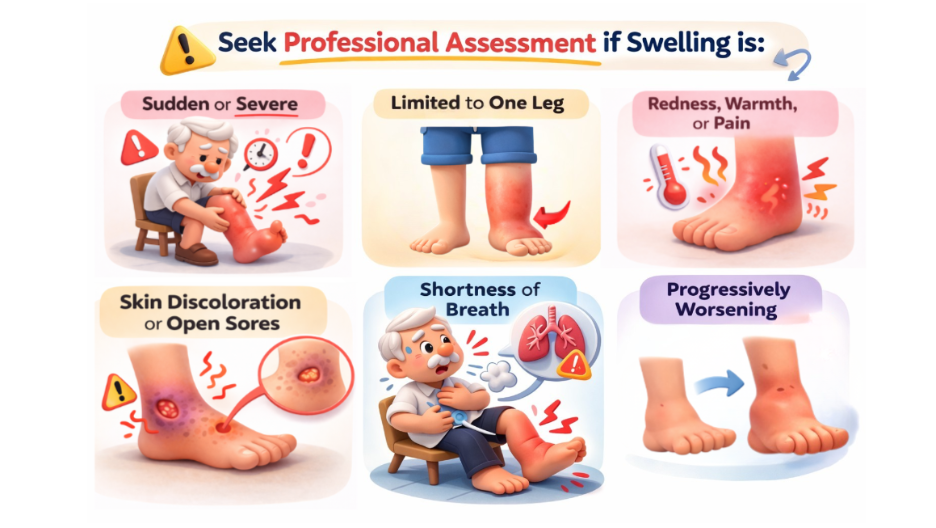
Seek professional assessment if swelling is:
- Sudden or severe
- Limited to one leg
- Accompanied by redness, warmth, or pain
- Associated with skin discoloration or open sores
- Paired with shortness of breath
- Progressively worsening
Even mild feet swelling in the elderly can increase skin tension, raising the risk of cracks or ulcers, particularly in individuals with underlying medical conditions.
Increased Risk for Patients with Diabetes and Circulation Issues
Older adults with diabetes face a higher risk of complications from swelling. Research shows that people with diabetes are significantly more likely to develop lower-extremity edema due to vascular and nerve changes.
Swelling increases pressure within tissues, and when combined with neuropathy (reduced sensation), small injuries may go unnoticed. Poor circulation can delay healing, increasing the risk of infection or ulcer formation.
Because of this, the causes of foot swelling in elderly patients with diabetes should always be carefully evaluated. Early intervention can prevent serious complications.
For more insight into the importance of specialized care, our article on Podiatrist for Seniors: Why Specialized Foot Care Matters as You Age explains how aging changes affect foot health and why routine monitoring is essential.
How Swelling Impacts Mobility and Safety
Chronic swelling can affect more than appearance. It may:
- Alter shoe fit
- Increase fall risk
- Reduce balance
- Contribute to skin fragility
- Lead to chronic discomfort
Over time, persistent edema can cause skin thickening, discoloration, and increased susceptibility to infection.
Maintaining mobility is critical for preserving independence and overall quality of life.
When Home Measures May Help
For mild, temporary swelling, conservative measures may provide relief:
- Elevating legs above heart level
- Gentle movement and walking
- Wearing properly fitted footwear
- Staying hydrated
However, compression therapy or medication adjustments should only be used under medical guidance. Improper use of compression in patients with arterial disease can be harmful.
When Professional Care Is Essential
Professional evaluation is important when swelling:
- Persists for more than a few days
- Recurs frequently
- Worsens despite elevation
- Occurs in patients with diabetes, heart disease, or kidney disease
- Leads to skin changes or wounds
Assessment may include review of medical history, medication evaluation, circulation testing, and examination of skin integrity.
Early expert care improves outcomes by identifying reversible causes and preventing progression.
Compassionate In-Home Evaluation for Seniors
Swelling in the feet and ankles should never be ignored, especially in older adults. While some cases are mild, others require targeted treatment to prevent complications.
Allevio Care Anywhere provides expert, compassionate in-home podiatry services designed specifically for seniors and individuals with mobility limitations. Our team carefully evaluates swollen ankles in elderly patients, monitors circulation and skin health, and works collaboratively to support long-term comfort and safety.
Services are available in Utah, Idaho, the Houston area, and Nebraska. You can explore all of our locations to see where care is offered near you.
If you or a loved one is experiencing persistent or concerning swelling, scheduling an appointment allows for professional evaluation in the comfort of home. Early attention helps protect mobility, prevent complications, and support continued independence.


