


A heel callus may seem like a small issue at first, just a patch of rough, thickened skin but for many adults and seniors, it can quickly become uncomfortable, painful, or limiting. When calluses crack, thicken, or begin to affect how you walk, they can interfere with daily activities and increase the risk of skin breakdown, especially for people with diabetes or circulation problems.
Understanding why heel calluses form, when they can be managed conservatively, and when professional care is necessary can help protect both comfort and long-term foot health.
What Is a Heel Callus?
A heel callus is a buildup of hardened skin that develops as a response to repeated pressure or friction. Unlike corns, which are smaller and more concentrated, calluses on heels of feet tend to spread over a broader area. They commonly appear on the bottom of the heel but may also form as a callus on the back of the heel or a callus on the side of the heel, depending on shoe fit and walking mechanics.
Calluses themselves are not inherently dangerous. However, when the skin becomes excessively thick or dry, it can crack and lead to pain, inflammation, or infection.
Why Calluses Form on the Heel of the Foot
Repeated Pressure and Friction
The heel absorbs significant force with every step. Prolonged standing, walking on hard surfaces, or wearing shoes with inadequate cushioning places repeated stress on this area. Over time, the skin thickens to protect itself, leading to a callus on heel of foot.
Shoes that rub the heel particularly those with stiff backs or poor support, are a frequent cause of callus on heel formation.
Foot Structure and Gait Changes
Foot structure plays an important role in where pressure accumulates. Flat feet, high arches, or changes in gait can concentrate force on specific areas of the heel, increasing the likelihood of a callus in heel development.
Age-related changes also matter. As we get older, the natural fat pad beneath the heel thins, reducing shock absorption and making callus formation more likely.
Dry Skin and Reduced Elasticity
Dry skin lacks flexibility, making it more prone to thickening and cracking under pressure. Studies estimate that over 20% of adults experience chronic dry skin on the feet, with higher rates among older adults. When dryness combines with pressure, calluses can progress quickly and become painful.
Medical Conditions That Increase Risk
Certain health conditions significantly raise the risk of callus-related complications, including:
- Diabetes
- Peripheral artery disease
- Neuropathy
- Reduced circulation
People with diabetes are particularly vulnerable. Research shows that up to 10% of individuals with diabetes will develop a foot ulcer in their lifetime, often beginning with pressure points beneath callused skin. Reduced sensation and slower healing mean even minor calluses should be monitored carefully. For a deeper look at this risk, our article on Foot Calluses and Diabetes: Risks, Prevention, and Safe Treatment explains why early care is so important for diabetic patients.
When Heel Calluses Become Painful
A heel callus becomes problematic when pressure builds beneath thickened skin or when cracks form. A painful callus on heel may cause:
- Soreness or tenderness when walking
- Sharp pain from deep fissures
- Changes in gait to avoid pressure
- Redness or inflammation around the callus
Cracked calluses can bleed and create an entry point for bacteria, increasing infection risk, especially in patients with compromised circulation.
How to Treat Heel Calluses Safely
When Conservative Care May Be Appropriate
For mild, non-painful calluses, conservative management may help slow progression:
- Wearing supportive shoes with proper heel cushioning
- Reducing friction with well-fitted footwear
- Maintaining skin hydration with appropriate moisturizers
These measures are intended to manage pressure, not remove the callus entirely.
Why At-Home Removal Can Be Dangerous
Many people attempt to shave or cut calluses at home. This approach can easily damage healthy skin and increase the risk of infection. Chemical callus removers may also irritate or burn surrounding tissue.
For seniors, individuals with diabetes, or those with circulation issues, even a small cut can lead to delayed healing or serious complications. In these cases, home removal should be avoided.
Professional Treatment for Calluses on Heels
When a callus becomes painful, cracked, or keeps returning, professional care offers the safest and most effective solution. Medical callus treatment focuses on both relief and prevention.
Through professional callus care and reduction, a podiatry provider can safely remove excess thickened skin, reduce pressure points, and evaluate footwear or structural factors contributing to the problem. Ongoing monitoring helps prevent recurrence and protects skin integrity, particularly for high-risk patients.
When to See a Podiatrist for a Heel Callus
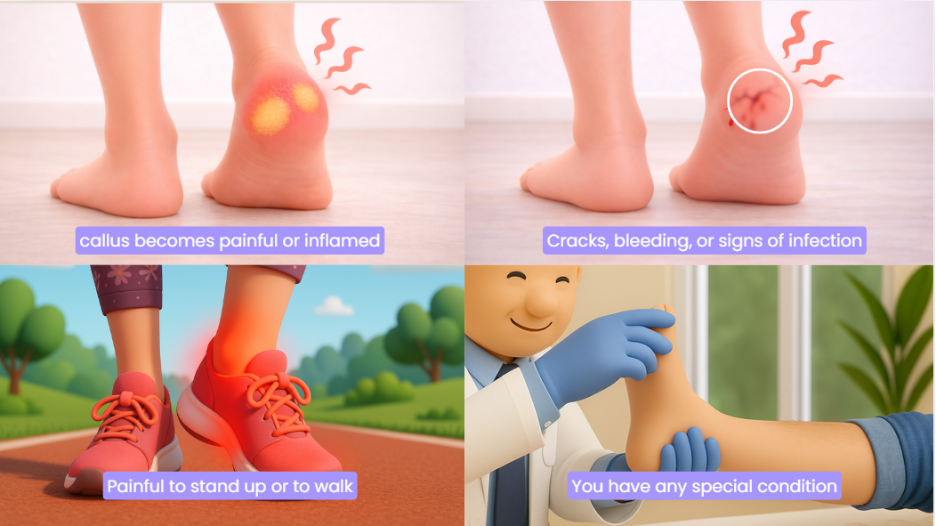
Professional evaluation is recommended if:
- A heel callus becomes painful or inflamed
- Cracks, bleeding, or signs of infection develop
- Walking or standing becomes uncomfortable
- The callus returns repeatedly
- You have diabetes, neuropathy, or circulation problems
Early intervention can prevent a simple callus from progressing into a more serious condition.
Why Early Expert Care Improves Outcomes
For individuals with diabetes or vascular disease, calluses are more than a surface issue. Pressure beneath thickened skin can damage deeper tissue, increasing the risk of ulcers and infection. Clinical studies show that regular professional foot care significantly reduces ulcer risk in high-risk patients, underscoring the value of early evaluation.
Addressing calluses promptly supports mobility, reduces pain, and helps preserve independence, especially for older adults.
Trusted In-Home Podiatry Care, Where You Need It
Heel calluses are common, but ongoing discomfort or skin breakdown should never be ignored. If you’re dealing with a persistent or painful heel callus, expert care can make a meaningful difference.
Allevio Care Anywhere provides compassionate, in-home podiatry services for patients who benefit from care delivered in a familiar, comfortable setting. Our team offers professional evaluation and treatment for heel calluses and other foot concerns, with services available in Utah, Idaho, the Houston area, and Nebraska. You can also explore all of our locations to see where care is available near you.
If you’re unsure whether a callus needs medical attention or would like help managing heel calluses safely, scheduling an appointment allows you to receive personalized care focused on protecting your foot health, comfort, and mobility.


