


Noticing a thick patch of skin or a fluid-filled bubble on your foot can be concerning, especially when it causes discomfort or appears suddenly. Many patients are unsure whether they are dealing with a callus or a blister, and understanding the distinction is essential for proper care. Knowing the difference helps guide safe treatment, prevent complications, and protect long-term foot health.
While both conditions are common and often related to friction, they develop differently and require different approaches particularly for older adults and individuals with diabetes or circulation concerns, where even minor skin changes can progress if left unaddressed.
What Is a Callus?
A callus is an area of thickened, hardened skin that develops gradually as the body responds to repeated pressure or friction. It is a protective mechanism designed to reduce damage to underlying tissues.
Calluses most commonly form on:
- The heel
- The ball of the foot
- The sides or tops of the toes
Typical characteristics include:
- Thick, rough texture
- Yellowish or pale appearance
- Gradual development over time
- Mild discomfort that can worsen if thickening continues
Although calluses may not initially be painful, excessive buildup can create pressure and increase the risk of cracks or underlying tissue injury.
What Is a Blister?
A blister is a fluid-filled pocket that forms beneath the outer layer of skin, usually due to acute friction or irritation.
Blisters are often caused by:
- New or tight footwear
- Repetitive movement, such as walking long distances
- Moisture combined with friction
Blisters typically appear as:
- Raised, bubble-like areas
- Filled with clear or sometimes blood-tinged fluid
- Tender or painful when pressure is applied
- Rapid onset over hours or days
Unlike calluses, blisters are the body’s immediate response to protect damaged skin.
Callus vs Blister: Understanding the Key Differences
Distinguishing callus vs blister is important because each condition requires a different care approach.
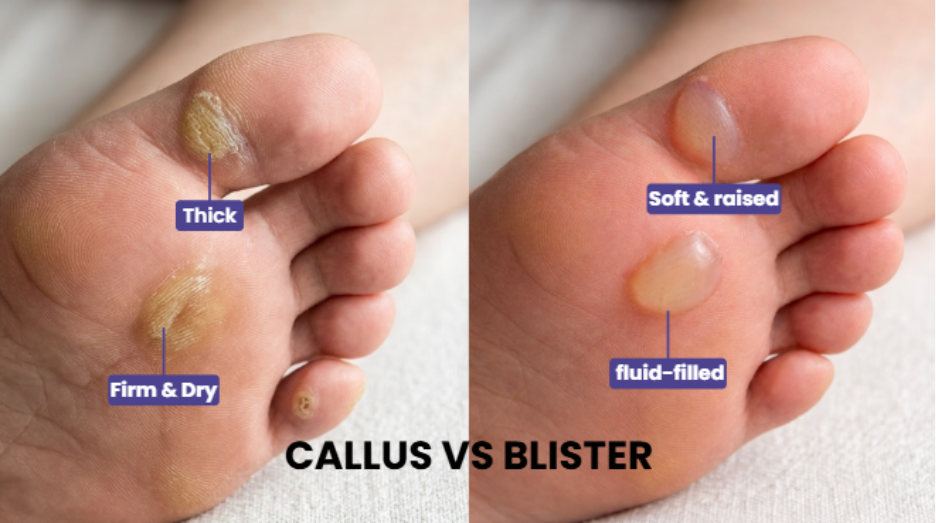
Appearance and Texture
- Callus: Thick, firm, and dry
- Blister: Soft, raised, and fluid-filled
Development Timeline
- Callus: Forms gradually over time
- Blister: Develops quickly, often within hours or days
Cause
- Callus: Long-term pressure or repeated friction
- Blister: Sudden or short-term friction
Sensation
- Callus: May be painless or mildly uncomfortable
- Blister: Often painful and sensitive
Understanding this difference between callus and blister helps determine the safest next steps for treatment and prevention.
Will Blisters Turn Into Calluses?
A common question is whether blisters and calluses on feet are connected. In some cases, they are.
If a blister heals but the same area continues to experience pressure or friction, the skin may thicken as a protective response. Over time, this can lead to callus formation.
This is why addressing the underlying cause, such as improper footwear or repetitive pressure, is essential. Without intervention, recurring irritation may result in ongoing cycles of blister or callus development.
Common Causes of Blisters and Calluses
Both conditions are typically linked to mechanical stress on the skin.
Contributing Factors Include:
- Ill-fitting shoes or narrow toe boxes
- Prolonged standing or walking
- High-impact physical activity
- Abnormal gait or foot structure
- Moisture buildup inside footwear
In individuals with limited mobility or structural foot changes, pressure may concentrate in specific areas, increasing the likelihood of blisters and calluses forming.
Safe Treatment for Calluses
Managing calluses requires a careful and controlled approach. While mild cases may be managed conservatively, improper treatment can lead to skin injury.
Recommended Care:
- Reducing pressure with properly fitted shoes
- Using protective padding to relieve friction
- Keeping skin moisturized to prevent cracking
When calluses become thick, painful, or difficult to manage, professional care is the safest option. Specialized callus care and reduction services can help remove excess buildup safely while addressing the underlying cause of pressure.
Safe Treatment for Blisters
Blisters should be handled gently to protect the underlying skin and prevent infection.
Best Practices:
- Keep the blister clean and covered
- Use protective dressings to reduce friction
- Avoid unnecessary popping
If a blister breaks, proper hygiene is essential to prevent infection. Persistent or painful blisters should be evaluated by a healthcare professional.
When to Seek Professional Care
Although many cases of callus vs blister can be managed at home, certain signs indicate the need for medical evaluation.
Seek professional care if:
- The area becomes painful, swollen, or inflamed
- There are signs of infection such as redness, warmth, or drainage
- The callus becomes excessively thick or cracked
- Blisters recur frequently in the same location
- There is any skin breakdown or open wound
Early evaluation allows for proper treatment and reduces the risk of complications.
Increased Risk for Patients With Diabetes
For individuals with diabetes, the distinction between blister vs callus becomes especially important.
Diabetes can affect circulation and the skin’s ability to heal properly. According to the American Diabetes Association’s guidance on diabetic foot complications, foot ulcers develop in approximately 15% of people with diabetes and often begin with minor issues such as blisters, calluses, or small areas of pressure that go unnoticed or untreated.
As a result:
- Blisters may go unnoticed and worsen
- Calluses may conceal underlying pressure points or early ulcers
- Healing may be slower, increasing infection risk
Because of these factors, even minor skin changes should be evaluated promptly. Preventive care and routine monitoring play a critical role in avoiding complications.
Preventing Blisters and Calluses
Prevention focuses on minimizing friction and protecting the skin.
Key Strategies:
- Wear properly fitted, supportive footwear
- Choose moisture-wicking socks
- Keep feet clean and dry
- Inspect feet daily for early signs of irritation
- Address pressure points early
Consistent preventive care reduces the likelihood of recurring issues and supports long-term foot health.
Compassionate Foot Care When You Need It
Understanding the difference between callus vs blister allows you to take the right steps toward safe treatment and prevention. While both conditions are common, they should not be ignored, especially when symptoms persist or occur alongside underlying health conditions.
Allevio Care Anywhere provides compassionate, expert in-home podiatry services designed to support patients in managing foot conditions safely and effectively. Our team offers specialized callus care and reduction services to relieve pressure, improve comfort, and help prevent complications.
If you or a loved one would benefit from professional foot care, you can request an appointment through our contact page. Allevio Care Anywhere proudly serves patients across Utah, Idaho, Houston, and Nebraska, you can explore all service areas on our locations page to find care near you.


